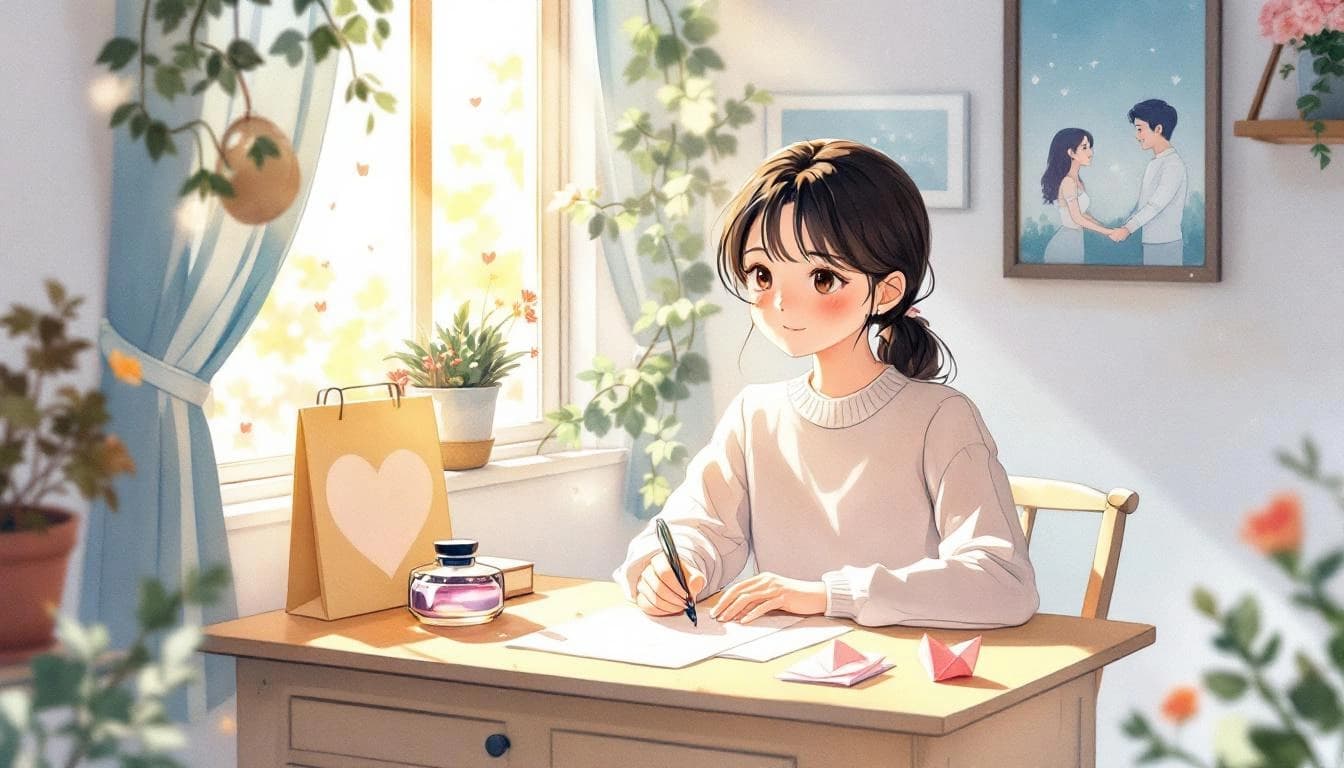
How to Write a Love Letter
TL;DR:
- Start with specific memories, not generic praise or empty adjectives
- Follow a four-part structure: authentic opening, detailed body, forward-looking close
- Avoid clichés, overpromising, and pressure tactics that create obligation
- Choose format based on relationship stage and emotional weight
- Use the final checklist to ensure sincerity and specificity
A love letter captures what feels too big to say out loud. It’s not about perfect words—it’s about honest ones. This guide on how to write a love letter walks you through a simple process to create something that sounds like you and means something to them.
What a Great Love Letter Actually Achieves
A strong love letter makes the reader feel seen. It turns abstract feelings into concrete moments they remember too. The best ones balance vulnerability with confidence—sharing what you feel without begging for a response.
Success comes from three things: specific details only you would know, language that matches how you actually speak, and a tone that fits your relationship stage. When these align, the letter becomes a keepsake rather than just a note.
Choose Your Foundation: Audience, Tone, and Format
Before you write, answer three quick questions:
Who is this for? A long-term partner, spouse, or new relationship each needs a different weight. Newer connections benefit from lighter, present-focused language. Established relationships can carry deeper future commitments.
How formal should you be? Match your everyday dynamic. If you normally text in shorthand, a stiff "My dearest" feels off. If you cherish tradition, a handwritten page fits.
Handwrite or digital? Handwriting adds physical presence and permanence—good for milestones. Digital works for speed or distance—good for spontaneous moments.
Step-by-Step: Write Your Love Letter
Follow these four steps from blank page to finished draft.
Step 1: Gather Specific Memories and Feelings
Set a timer for ten minutes. List moments they made you feel loved, times you admired them without saying so, and small details that make them unique. Think of a shared joke, the way they organize their desk, or how they look when focused.
Write down the actual words you’ve wanted to say but held back. Avoid adjectives like "amazing" or "perfect." Instead, grab the specifics: the song playing, the temperature of the room, the exact mistake they helped you fix.
Step 2: Write an Opening That Sounds Like You
Your first line sets the tone. Skip clichés like "I don’t know how to start." Try two patterns instead:
Pattern 1: Direct and present: "I’ve started this letter three times already, which feels fitting since I never quite find the right words when we’re together either."
Pattern 2: Memory-based: "Last Tuesday, you made coffee exactly how I like it without asking. That’s when I realized I needed to write this."
Choose the one that feels closer to how you actually talk. If neither fits, there are 25+ love letter opening lines sorted by tone and relationship stage to help you find one that does.
Step 3: Build the Body With Details and Shared Moments
This is the heart of your letter. Take two or three details from your pre-writing list and expand them into short paragraphs. Show, don’t tell.
Instead of "You make me happy," try: "You sent me that podcast episode at noon last week. By 2 p.m., I had listened twice and my whole afternoon tilted toward gratitude."
Link these moments to what they reveal about your feelings. The specificity makes the emotion land.
Step 4: End With a Clear, Forward-Looking Statement
Your closing should point toward what’s next. Avoid pressure—don’t make promises you can’t keep.
Gentle continuity: "I’ll keep looking for ways to say this better, but for now, this will have to do."
Hopeful partnership: "I’m grateful we get to build more of these moments together."
Simple reaffirmation: "You matter to me. That’s what I needed to say today."
Common Mistakes That Dilute Your Message (and How to Fix Them)
Clichés: "You complete me" sounds borrowed. Fix: replace with one specific action that made you feel whole.
Overstatement: "I can’t live without you" creates pressure. Fix: "Life feels more coherent with you in it" is honest and sustainable.
Vagueness: "I love everything about you" feels generic. Fix: list two or three specific traits or moments.
Pressure tactics: "I hope you feel the same" pushes for reciprocation. Fix: keep the focus on your own feelings and let them respond naturally.
Micro-Assets: Example Frameworks by Relationship Stage
These short structures help you organize your thoughts without writing the letter for you.
Framework for a Long-Term Partner
Opening: "I was thinking about [specific shared habit]..." Memory: "The time we [specific moment that tested or strengthened you]..." Future: "I still want [shared goal or experience]..." Close: "Thank you for [specific partnership quality]."
Framework for a New Relationship
Opening: "Since we [first meeting detail], I’ve noticed..." Detail: "You [specific trait or action]..." Present feeling: "That makes me feel [honest emotion]..." Forward look: "I’d love to see where this goes."
Framework for a Spouse
Opening: "On our [anniversary, or random Tuesday], I realized..." Appreciation: "Our partnership works because [specific dynamic]..." Shared goal: "I’m still committed to [joint project or value]..." Reaffirmation: "I choose you today because [specific reason]."
These frameworks give you the structure. To fill them in more easily, love letter templates offers six fill-in-the-blank scaffolds for every relationship stage. Or if you want to see what a finished letter looks like, love letter examples walks through eight complete samples.
Final Checklist Before Sending
Run through these questions:
- Specificity: Does it name actual moments or just use adjectives?
- Sincerity: Does it sound like my voice or someone else’s?
- Pressure-free: Am I asking for a response or simply sharing?
- Proofread: Read it aloud once. Fix any awkward rhythm.
If you answer yes to all four, you’re ready.
Love Letter FAQs
How long should a love letter be?
One to two handwritten pages, or roughly 200 to 500 words. Length matters less than specificity. A short, detailed paragraph beats a long, vague page. Write until you’ve said what you needed to say, then stop.
Is it okay to quote poetry or song lyrics?
Use quotes sparingly. One short line can add texture if it holds personal meaning for both of you. Too many quotes drown out your voice. When in doubt, paraphrase the feeling in your own words instead.
What if I'm not good with words?
Specificity beats eloquence every time. "You handed me the wrench before I asked" says more than "You’re so thoughtful." Trust concrete details. If you can describe a moment, you can write a love letter. Your voice is enough.
Should I handwrite it or send it digitally?
Handwriting adds intimacy and physical permanence—best for milestones or deep commitments. Digital offers speed and spontaneity—best for timely moments or long distance. Choose based on emotional weight, not convenience alone.